
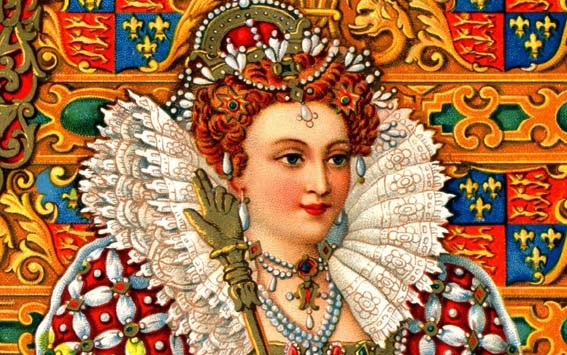
Written by Ann Farmer
[Ed: what could be better to get one’s teeth into than an article such as this, providing material for thought and debate! Start reading and commenting while waiting for Part 2.]
Some Leave supporters see Brexit in the light of the Reformation – a bid for independence, a ‘breaking away from Rome’, but the reality is slightly more complex – and unlike Brexit, no vote was taken on the Reformation.
The Reformation certainly marked a turning away from Europe, but not always with positive results. The Tudor age saw British expansion overseas and the beginnings of colonies in the New World, but in turning away from Pope Pius V’s campaign to repel the Ottoman Turks, we were absent from the stunning victory of Lepanto in 1571. And thanks to suspicions about ‘Papal power’ we embraced Pope Gregory’s new calendar in 1752 – only 170 years late (link).
We have never stood completely alone, as Churchill pointed out in 1940:
“[E]ven if, which I do not for a moment believe, this island or a large part of it were subjugated and starving, then our Empire beyond the seas, armed and guarded by the British fleet, would carry on the struggle, until, in God’s good time, the new world, with all its power and might, steps forth to the rescue and the liberation of the old.”
Woke commentators would sneer that Britain ‘subjugated’ the Empire, but the continued flourishing of the Commonwealth tells against this narrative – indeed, some countries, including South Sudan and Suriname, have applied to join our family of nations (link).
The British have always formed strategic alliances with other nations, but sometimes we have intervened in world affairs when we could have sat it out – as in 1939. Since Brexit we have also formed various alliances, formal and informal; consequently Brexit is a re-run of British globalism, not a retreat from it (link).
Catholicism was a strong influence on the founders of the European project (link) – Robert Schuman is now on the path to sainthood (link) (link) – and, understandably in the wake of the Great War, they were concerned to prevent another intra-European conflict. The EU’s predecessor, the European Economic Community, was established in 1957 by the Treaty of Rome, but if the current configuration is a sinister papal plot, it is one bent on suppressing Catholic influence – indeed, the present Pope has accused the EU of acting like a dictatorship in banning references to Christmas (link).
The entity we voted to quit in 2016 was very different from the EEC; but as well as establishing the European Commission, the Treaty’s proposals for a customs union, a single market for member states and common policies for agriculture, transport and a European Social Fund, marked out the direction of travel to a United States of Europe.
The UK fell out of the common currency in 1992, and arguably it was this event – at the time portrayed as a disaster – which paved the way for Brexit. It helped us avoid real disasters like a mooted European army, which would eclipse NATO, and a possible EU takeover bid of member nations’ sovereign powers (link). The only ones to gain from these experiments, which would be as shambolic as everything else touched by Brussels, would be Europe’s enemies.
Brexit was not so much a revolt against Rome as a break from Brussels, a real revolutionary moment – although so, we are told, was the Reformation. And yet if, as G. K. Chesterton maintained, a real revolution is like the revolution of a wheel, returning it to its original place – a restoration rather than a launch into an unknown future – this definition fits Brexit much better than the Reformation, which was not a restoration but a break with the past.
The desire for restoration rather than a French-style revolution can be glimpsed in the history of English socialism, seen as owing more to Methodism than to Marx – more to nostalgia than nihilism. William Blake’s Jerusalem, once a staple at Labour Party conferences as well as with the Women’s Institute, looks back to the legend of Joseph of Arimathea and the infant Jesus visiting Glastonbury.
In Victorian times the socialist William Morris and his Arts and Crafts movement were not plotting a Marxist revolution but longing for a lost Eden, for ‘when Adam delved, and Eve span, who then was the gentleman?’ Despite the intricate splendour of the cathedrals, ‘medieval’ has come to signify ignorance, superstition and squalor, but the Victorian nostalgia for the medieval, as well as representing a yearning for a return to a pre-industrial age – when human beings were not treated merely as cogs in a machine – signified nostalgia for a pre-Reformation ‘romantic’ religion that in fact was eminently practical (link).
Perhaps our fascination with antiques, steam trains and old ruins betrays an unconscious yearning for an idealised past; the vague feeling that something is missing may suggest faint folk memories of that lost ‘welfare state’ provided by the monks of old. As the nation took the place of religion as a focus of loyalty, the ‘Virgin Queen’ replaced the Virgin Mary in the public imagination, and it is perhaps no coincidence that the nation’s most glorious epochs have coincided with the reigns of Elizabeth Tudor, Queen Victoria and our own Elizabeth II.
In our machine-dependent age, the Victorians are as distant in history as the medieval age was to them; ‘Victorian’ is now a pejorative term signifying outdated attitudes. However, Chesterton, born in the Victorian age, saw the Reformation as a revolt of the rich against the poor. It was certainly a top-down revolt. Before the break with Rome, wealthy men would leave money to chantries where prayers would be offered for their souls, to help them get to Heaven. One can hardly imagine today’s ‘left-wing’ billionaires doing that, although they like nothing better than to sermonise their ‘congregations’ from internet pulpits on not being racist, sexist and killing the Planet (link).
In 1547 the Chantries Act abolished the remaining chantries and confiscated their assets; increasingly, wealth was seen as a sign of God’s approval rather than an obstacle that stopped the rich getting into Heaven – like a camel trying to get through the eye of a needle. The richly decorated churches had provided artistic inspiration as well as religious instruction for the poor; but with the Reformation, the stolen wealth of the monasteries further enriched the wealthy, and art became something that adorned their private residences.
There was no referendum on the Reformation, but the regional revolts against the new religion of royalty revealed the widespread unpopularity of the new arrangement. Reform sounded reasonable, but the wholesale destruction of buildings and beliefs seemed like shocking sacrilege. And yet in 1521, Pope Leo X had bestowed the title Fidei Defensor (‘Defender of the Faith’) upon Henry VIII for defending the seven sacraments, including the sacramental nature of marriage – and even more ironically, the supremacy of the pope against the Reformers.
According to the official narrative the king, disillusioned by the dissolute behaviour of the monks, ordered the Dissolution of the monasteries; instead, he was driven by greed and the desire to set aside his lawful and loyal spouse, Katherine of Aragon so he could marry Anne Boleyn. Declaring himself head of the English Church was not the result of a sudden religious conversion, but a symptom of kings doing what kings always did – changing the rules to accommodate their personal desires. When the Pope refused him an annulment, Henry started his own revolution against the Church, although he resisted attempts to thoroughly ‘Protestantise’ it (link).
Any lingering doubts about his motivations would be set aside four wives later, but even at the beginning of the ‘King’s Great Matter’, public sympathy for Queen Katherine was not dissimilar to that felt for Princess Diana in our own day; if it had been left to the people, Anne Boleyn’s reign might have been even shorter. But the regional revolts were ruthlessly put down; religious processions were banned, along with holy days and pilgrimages. The bones of the saints were scattered and their shrines smashed – most significantly, the shrine of Thomas Becket, the ‘troublesome priest’ murdered at the behest of another Henry back in 1170, but for which crime the earlier Henry had done public penance (link).
In contrast, Henry VIII did not repent of executing his Chancellor and good friend Sir Thomas More, who could not go against his conscience by recognising the royal marriage. More’s protest is eerily appropriate in an era when critics are cancelled for transgressions against the unwritten laws of woke: ‘I do nobody harm, I say none harm, I think none harm, but wish everybody good. And if this be not enough to keep a man alive, in good faith, I long not to live’ (link).
In a move that both wokist and Islamist would applaud, during the Reformation statues were toppled and stained glass smashed. Along with the convents, the monasteries which had provided for the poor and the sick while improving the land, were closed. Property was sold off or gifted to the King’s supporters. The monasteries were literally demolished; as Shakespeare – seen by some as a secret Catholic – put it in his Sonnet 73: ‘Bare ruined choirs, where late the sweet birds sang.’
In mitigation, both Mary and Elizabeth came from broken homes, and perhaps at the beginning of this cultural earthquake the majority kept their heads down, hoping it would pass – and so it might, if Mary Tudor had not taken such bloody revenge. Elizabeth I was also quite bloody (her victims included Mary Queen of Scots) and whereas Mary consigned Protestants to the fire – the traditional penalty for heresy – under Henry VIII and his successors, Catholics were hung, drawn and quartered as traitors.
The Reformation did not pass (link); but far from people rejecting ‘foreign rule’ and embracing ‘independence’ (link), more recent scholarship has revealed that as well as Recusants who refused to attend their parish church and paid the consequent fines, there were rather more ‘Church Papists’ who attended church with their fingers metaphorically crossed behind their backs. Where the lord of the manor provided Mass in secret, Catholicism was more likely to survive.
The Civil War revealed the extent of Catholic support for the monarchy against Oliver Cromwell – the Republican who bequeathed the title Lord Protector to his son – but the Restoration of the real monarchy under Charles II (whose Catholic Queen, Catherine of Braganza, popularised tea-drinking) far from heralding a respite for Catholic Royalists, saw the return of extreme anti-Catholic persecution, most notoriously the fabricated Popish Plot. Charles is said to have converted to Catholicism on his deathbed and his Catholic brother James ascended the throne, but he antagonised Protestants, some of whom had acquired land and wealth at the Reformation.
The Protestant Dutch were favoured over the Catholic French, despite the Dutch navy’s raid on the Medway in 1667 and the long-running Anglo-Dutch wars. In 1688 James was ousted when his second wife bore a son, to be replaced by his daughter Mary and her Dutch husband William, and subsequently by his other daughter Anne – another interesting psychological study in filial devotion.
The 1689 Declaration of Rights actually stamped on the rights of Catholics, barring them from the throne, and an Act of 1700 allowed Protestant next-of-kin to dispossess Catholic heirs to estates; Catholics were forbidden to buy or inherit land, banned from owning a horse worth more than five pounds, holding commissions in the army and navy, or entering the professions; parents could be fined if they sent their children abroad for a Catholic education, and under George I, had to pay double land tax. The laws were not always enforced, but there was a constant danger of neighbours acting as informers. The defeat of the Stuarts at Culloden in 1746 marked the end of any hope of a Catholic ascending the throne.
[Ed: As Ecclesiastes said, ‘there’s nothing new under the sun’, so it’s not surprising to find some parallels to today’s society – and they didn’t even had social media during those years. it gets even better in Part 2 which we’ll publish after Christmas. You will be informed as to the date.]






The graphic on this article is colourful and symbolic. The article outdoes the graphic in colour and information.
It is not easy to find the truth when those in power write history. How can we judge when propaganda is so prevalent.
My perspective comes from the development of the commoner. When the colour and titillation is stripped away a different and underlying picture is found. The lives of the commoners are more important than those of the elites.
Would life compare in say a Saxon village to that of the Tudor Age five hundred years later? Similarly what was the lot of a serf when the Magna Carta signed? Ethics were different the values have changed but love, the family unit, the matters of life and nature are the same.
How long must commoners wait for an end to these elitist power games? Even the so called emancipation of men and women in the UK can be construed as an illusion. It is difficult to pin down truth but we should try.
Perhaps power is again slipping through the fingers of the corrupt. In history while the religious, monarchical, political, financial or corporate elitists play their games of power the true potential of humans is shrouded and subdued. Perhaps for fear that commoners would get beyond their station? The lies are ubiquitous.
The phoenix was said to burn every 500 years before resurrection. It may rise again in the 21st century but I would say it will not be seen as a revolution, or a restoration, not even a resurrection, but a complete Reformation.
I am looking forward to Part 2 thank you Anne.
I always understood the reformation / disolution etc was at least in part due to the churches debasement ( Inflation ) of the currency.to steal the wealth. Nothing new there.
Ann, I said years ago, Henry VIII did the Right thing, for the Wrong reason!
I still believe that.
Actually his marriage to Katherine of Aragon was maybe founded on a lie. She was first married to Henry’s eldest brother. He died and Katherine, declared to the Pope, that he had never succeeded in consummating the marriage.
Otherwise the Church would have forbidden a marriage to his brother!
There was then a change of Pope as well. That was one reason Henry was refused the annulment.
Hey up. Doesn’t Henry VIII being driven by his – err – sexual inclinations, ring a few bells in our present situation!
I’m thinking of the carbon neutral scam of course.
But Henry had the excuse of needing a male heir.
Closing the Monasteries was pure greed and yes it did remove the only, then existing, welfare state.
But I still say the Reformation was the RIGHT thing. Who cares about the Calendar or whether we got credit on the world stage for joining in that Battle.
Elizabeth 1 was no way near as bloodthirsty as her sister Mary, so far as my reading informs me. She only had Mary Queen of Scots killed, after proof of several plots to steal Elizabeth’s rightful throne.
And don’t forget Guy Fawkes’ plot was a Catholic plot against England’s free decision to be ruled by a Protestant monarch.
Many thanks for this impressive article which really is food for thought.
Re Pope Francis canonising Founder of the EU, Schumann: the expression “is the Pope a Catholic?” has always been used to mean that something is a statement of the obvious. But I think it far from obvious that this very dubious Pope is, essentially, a Catholic; I think he is more Marxist and servant of Globocap, a devotee of the New World Order and probably of its One World Religion . The EU is also Marxist and serves Globocap.
I always thought it it very suspicious how the previous Pope Benedict was removed and Francis put in his place; was this a coup? I think Globocap have quietly managed to infiltrate and take over every single institution all over the world, governments, judiciary, accademia , media, churches, everything..
It is noticeable that Francis is providing the “moral authority” behind the the scam vaccines, open borders, environmentalism, and every other facet of The Great Reset.
mary. I don’t know about Globocap but I do think Cultural Marxists have infiltrated ‘every single institution’ including our Church of England.
Globocap includes Big Pharma for example. How many organisations and institutions get funding from the Bill and Melinda Gates Foundation. Universities, the MHRA, the BBC indirectly , the Guardian to name just a few. Doctors these days are often little more than marketing arm for Big Pharma. Churches worship at the altar of the Covid and Green Cults. Politicians’ and judiciaries’choice of policies that go against common sense and the good of UK and other countries can only be explained by corruption (probably in the form of “jam tomorrow” coupled with threats. Collaborators in the Covid scam all down the line to teachers and IT people have been bought too in the sense that their livelihood depends on following orders. Is it an exaggeration to say that practically the whole world has been bought by GloboCap, and all its institutions corrupted by it !
I’ve seen videos detailing how Black Rock and a small number of other financial institutions near the top of the pyramid own and control virtually the whole world. I’ll try to dig them outt.
Thanks mary. In that case I agree with what GloboCap are saying.
I mean I agree with what you are saying mary.
PS Globocap includes the banksters who have through their greed and irresponsibility created this colossal debt bubble which is no longer sustainable. This is how I understand the situation: They cant keep interest rates down or keep printing money for much longer, and in the not so distant future that bubble will go pop. This will I understand be about the biggest catastrophe in history with millions /billions even out of work and not getting the necessities of life. This would cause law and order to break down completely. The Davos clique who caused this realise this would be their own funeral too so they have devised the Central Bank Digital Currency and Digital ID to save their own skins. Their plan for sneaking in Digital ID which they know people will resist, is through a health pass which entails the jab.
Here’s a video re Black Rock https://www.youtube.com/watch?v=A4foal20UTA
PPS The Larry Fink mentioned in that video, along with Gates and other Davos characters, were I understand dinner guests at No 10 the night before the CoronavirusAct was renewed……………
See this too
https://dailyexpose.uk/2021/12/21/blackrock-vanguard-and-pharma-executives-are-making-a-killing-from-a-crisis-they-helped-to-create/
Now isn’t that strange! That you should publish excellent history at the very moment I have just put down an excellent (text) book entitled:-
“How the Scots invented the Modern World”
“The true story of how Western Europe’s poorest nation created our world and everything in it”.
The book’s story starts around 1700 with a tadoo between the Church and Local authority as to the enforcement of church doctrine, a chap, a lad really ended up hanged for blasphemy
Written by an American Arthur Herman, the book goes on to detail the growth of “The Scottish Enlightenment” which essentially was the growth and distribution of a wide philosophy that looked at all aspects of life and social affairs ( modernity in embryo perhaps) as opposed to subjects being ‘ biden’ by narrow Calvinism and a breaking out from feudal type slavery, if you like of the common man
Over the period thinkers like Hume, and Hutcheson and later Adam Smith ( wealth of Nations) led to the publishing of “the Edinburgh Review” which included articles strongly critical of practices and methods of those who wielded power in Scotland, indeed a number of its editors and adherents came to live in London and spread “the enlightenment” there and eventually around British Colonies and separately to America where Scots ( and their thinking) played a substantial part in the writing of the new constitution and indeed independence itself.
Adam Smith’s “Division of Labour” thesis leading to present day mass production (products can be far cheaper if produced in large numbers and thus more marketable)
I look forward to Ann Farmer’s next episode in the New Year, because I feel sure she will include episodes of Enlightenment philosophy.
Roger. That is a very interesting comment. I am very ignorant about Scottish history. Though I had got as far as understanding that Calvinism was not the most enlightened form of Protestantism.
Have you any idea how it came about that Mary Queen of Scots was a Catholic, while James VI of Scotland, 1st of England, was a Protestant?