
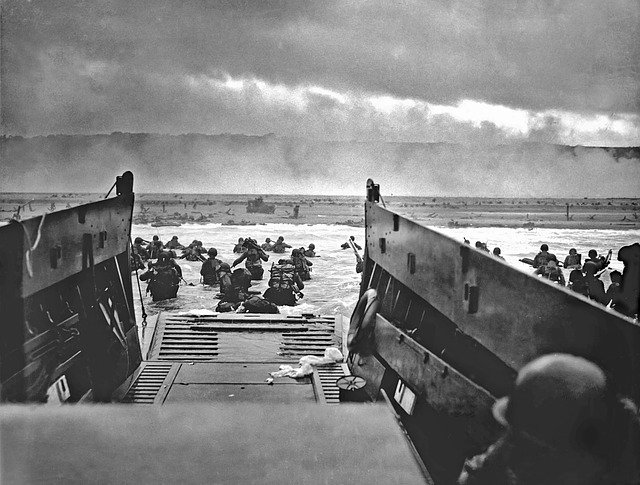
In the last few years there have been a series of quite popular lifestyle ‘Back in time for’ TV programmes. If in 20 years’ time, there are programmes about the 2020’s I wonder what journalists or historians will make of it.
It’s quite amazing, isn’t it, that two months into a health crisis, the British media has turned it into a sort of ‘plucky Brit’ situation where we are all alone in a confusing war situation, fighting time and an unseen enemy and using language and marketing techniques that have the public sold on the idea that this is a war like the last war (that virtually no one alive today can remember anyway) and is something that we lions led, as so many times before, by donkeys, can beat.
Well, not really. Hand washing, keeping away from other people and languishing at home while raising the organisation of the National Health Service to the status of some sort of deity which, although underfunded, understaffed, poorly equipped with few resources and badly managed – while again fighting the last war – still cannot be matched worldwide.
Much has been written in the media about the response of the public and how various appeals have resulted in well-meaning and generous amounts of money being donated to this charity or that. Volunteers came forward to assist in any way that they can, companies too have turned their production facilities over to producing personal protective equipment and so on, but it seems that bureaucracy, still even in times of emergency, gets in the way of individual efforts to help. In that war that the media is so fond of telling us about, would small boat owners and operators have met with a wall of bureaucracy when, in 1940, volunteering their boats and themselves to sail to Dunkirk? You can just imagine it. “Sorry, we can’t use you because you don’t have a current DBS/ CRB certificate, and some of the soldiers maybe under 21 so you will also have to undergo our safeguarding training and of course health and safety.”
At that time many people were working 12-hour shifts, up to 60 hours a week, seven days a week,. Others worked at two jobs, often fire-watching or air raid duties, local Defence Volunteers, Volunteer Ambulance, Special Constabulary, ARP Wardens – they got on with it without any fuss or bother and certainly if they thought they were worthy of special treatment (and probably didn’t) they certainly didn’t get it, although many were seriously physically and emotionally scarred for life, or lost their lives. Hospitals – no NHS then – continued to care for patients in the most appalling conditions, and there are harrowing accounts of operations and casualties arriving with life-threatening and serious injuries during air raids.
Ambulance staff were often young, coping without the equipment or training that is now common place, (the only paramedics then were first aiders in the armed services where the term originated, in fact paramedics were only introduced here in the UK along with better equipped and advanced intubation and cardiac resuscitation training after the disastrous yearlong ambulance’s national strike of the late 80s). These people were real heroes and often were reluctant to be described as such. Most were self-deprecating and would tell you that it was just something you had to get on with, although it was also something that most never forgot.
This though is a nice clean war. A war where furloughed staff are, for the moment being paid 80% of their wages, and many in the public sector are quite happy to work remotely from home on full salary, with a laptop provided by the taxpayer. Teachers, unlike their war-time predecessors, are reluctant in some cases to return to school, although there is no case world-wide of a young child passing on the virus to an adult. It’s a nice war for the people that the government is looking after. But not for the self-employed or small business owner, many of whom will – make no mistake – go out of business. In many ways it is a nice ‘middle class’ war, where people are concerned about the kids’ GCSE results being on assessment only or the fact that holidays will be difficult this year.
Part 2 will be published here tomorrow.






Some good points from Norman. 1) NHS Badly managed. 2) It’s all right for some – staying at home on full salary. 3) No reason for teachers to refuse to go back to work. Presumably they have also been at home on full pay.
Just what is wrong with the Turkish kebab wraps not up to UK standards ? Surely better than nowt, its all use once throw away ??
How many back office staff test PPE against COVID ?
Re the NHS. i have had a few encounters with the French system . No complaints on the medical treatment , shows there is no reason to deify the NHS. In some respects more efficient IMHO.
But another bureaucratic nightmare if you want to get reimbursed as per your insurance
No, no, no ! – 1940 has little to do with 2020. – Eighty years ago, this Nation that stood alone then, had to face up to a visible enemy, and with an incredibly fine leader, backed by a united cabinet of ministers, raised the Nation’s people to a very great service for all !
Now, in 2020, we face a health enemy that is invisible. – It carries no flag or creed, and is launched against all Nations together ! – Our leader and Government can only follow advice given by health professionals, and post virus, errors will be picked over in the luxury of hind-sight !
I trust that lessons will have been learnt by this pandemic, and stocks of necessary equipment will now be held for future use. – Financial standing will now have to be addressed, with assistance given to businesses facing bankruptcy, leading to high unemployment !
If we are able to face the challenge that the Senior Generation of WW2 faced, then with time, all will be well for this Nation. – Our Government is expected not to delay the will of the people, in clearing us totally from the EU. – Opportunity for us rests in that action now !
Hy Mike. Glad you still on here. I’ve been busy doing other things but back now. Totally agree with you. So long as we get fully out of the EU, ON TIME, Britain will again survive.
During the Falklands War, our nation did some incredible things in a few days, overcoming bureaucracy with the aim of equipping our forces for the job in hand, and they succeeded. Within days, fleets were assembled, aircraft were modified with new weapons (e.g. transport and maritime aircraft with refuelling probes and Sidewinder missiles), as the military has a way of ditching bureaucracy when required….
In this “war”, leave it to the military and things get done fast, the Royal Engineers with Infantry labour and Medical Corps specialists getting Nightingale Hospitals built within a week, other forces being used to set up testing stations across the nation and augment transport.
But the NHS bureaucracy… it plods on relentlessly, e.g. turning down willing British suppliers of PPE while expediting ineffective imports from China and Turkey… They should have turned that job over to the military, not just to fly a plane to bring in non-conformant PPE. As a Royal Logistics Corps Lt. Col.said, the NHS Supplies Division is “not fit for purpose”
Good to hear from you Brian. Hope you’re well.
Surviving, I’d say! Hope you are well too, Debbie
🙂
I echo that Debbie, he’s a long lost friend.
Good to see you back Brian, with your finger right on the button.
You might also recall if a certain political party had even in power there would have been no expeditionary force to the Falklands and not just because bureaucracy was incapable of moving with alacrity.
The metropolitan middle classes are generally in no rush to end the lockdown…
https://www.spiked-online.com/2020/05/08/lockdown-fanatics-scare-me-far-more-than-covid-19/