

Part 1 was published here yesterday.
This article was first published in Free Nations and we re-publish with the kind permission of both the author and the publisher.
This then became the foundation for our Common Law.
Although shires later spread throughout Anglo-Saxon England, it is thought to have been during the reign of King Alfred that they were created as administrative areas within the kingdom and then smaller areas, termed Hundreds established within the shires. These were ruled, under the King, by Ealdormen who were responsible for law and order and for providing justice. Both the Shires and the Hundreds had their own courts (the earlier Folkmoots) which were run by local dignitaries. The Hundred Courts, which met every four weeks, dealt with petty crime in their own area, while the Shire Courts, which met twice a year and were overseen by an agent of the king and dealt with more serious crime within the shire as a whole. These courts also allocated the gold which had been collected as tax by the ‘shire-reeve’ or peace officer. As burhs (boroughs or fortified towns) were gradually built during King Alfred’s reign, similar courts, held three times a year, were also founded within them and this system existed until this whole structure of local government was replaced in 1889 by the introduction of county councils.
The Shire Courts were held in the open air, using different locations for its meetings, as did the gatherings of the King’s Witan. However, it was the King himself who determined the Witan’s meeting times, the three main ones being held at Christmas, Easter and Whitsuntide. These then became the origin of the Courts of Assize, periodic courts of justice held around England and Wales until 1972 when they were replaced by a single permanent Crown Court.
During King Alfred’s reign, the duties of the Witan were extended to discussion of such things as taxation, defence and foreign policy. But before the Norman Conquest of 1066 and the imposition of primogeniture, the Witan’s greatest responsibility was that of electing the next King.
When William, Duke of Normandy, took the English throne in 1066 he introduced harsh laws to control his new subjects but did keep many which pertained to local customs and regulations. He also retained a smaller Witan with fewer duties which was then called the Curia Regis or King’s Council. A larger group of noble advisers was then formed, known as the Magnum Concilium or Great Council which formed the basis of the modern House of Lords.
However, during the next 150 years William I and his descendants took more and more power to themselves under their perceived Divine Right of Kings which resulted in a rebellion by the barons and the signing by King John of the Magna Carta in 1215. For the first time in history, this declared the sovereign to be subject to the rule of law and documented the liberties held by ‘free men’. While not perfect, this Great Charter did provide the foundation for individual rights in Britain and elsewhere which have lasted until today.
Unfortunately the spirit of the Charter was later broken which resulted in more rebellions by the barons and people and it was not until 1265 that a more representative Parliament was assembled by Simon de Montfort, the revolutionary Earl of Leicester who at that time was ruling England in place of the imprisoned King Henry III. He summoned not only lay magnates but two knights from each county and two citizens from each town and four men from each of the Cinque Ports. Although in 1295 a ‘Model Parliament’ was called by King Edward I and is said to be the model for later Parliaments, it is Simon de Montfort’s Parliament of 1265 which is usually regarded as being the first English Parliament and Simon de Montfort himself is often regarded as the founder of the House of Commons.
Indeed, in 1965 the Parliament of the United Kingdom presented a loyal address to Queen Elizabeth II to mark the 700th anniversary of Simon de Montfort’s Parliament.
But perhaps during this century the Sovereign, the House of Lords and the House of Commons, if they still exist, might look back to the year 450 and also celebrate the Anglo-Saxons and others who brought to this country the very traditions from which the British sense of democracy has grown over the centuries.





Part One and Part Two are very interesting though I suspect they may be wrong in some detail. However, is that it? Is it finished? As mentioned above, the role of the Christian Church(es) is/are completely omitted. The history I was taught only mentioned Divine right of Kings in Charles 1 time. Be that as it may. No one but me sees any irony in the fact that the beginning of what is now the EU was the Treaty of Rome! Henry VIII got rid of Rome’s dominion over us. (Never mind whether his reasons were right or wrong.) We resisted the Spanish Armada. We resisted Napoleon’s French Law. And we prevented the Germans ruling all of Europe, twice. The USSR also tried to form a united state of Europe and the capitalist Democracies defeated them too.
Are We Now going to bow down and to submit to RULE FROM BRUSSELS. By unelected bureaucrats.
Don’t forget this wonderful system started by King Alfred was profoundly rooted in Christianity and Roman Catholic Christianity at that.
What used to be ” this wonderful system”. Both Parliament and Christianity have degraded so much recently as to be not fit for purpose. Welby is now forming an alliance with remoaniacs to overturn Brexit, so much for Christianity leading democracy. It would be too much to ask that he devotes his energy to the persecution of Christians around the world, still mustn’t let suffering and death of Christians get in the way of the interfaith dialogue, known to some as appeasement.
As for the leader(s) of the RC church, well they have been a shining example of late. When I see them all in hell I’ll be able to tell them face to face.
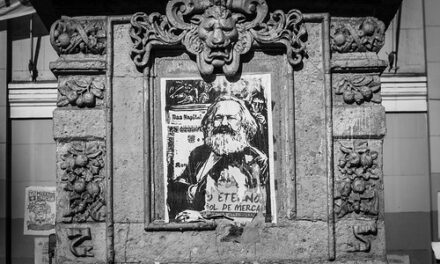
Pope Francis is a Marxist who is trying to destroy the Catholic church. He knows nothing except power. We hope and pray that he will be gone soon so that a good man will take his place and restore Catholic orthodoxy and Tradition.
Didn’t Malachy’s ‘Prophesies of the Popes’ indicate that this Pope is the last one, and a very bad one, too?
OK, OK…..I get the point. Firstly, you must remember the adage – “You can’t get a quart into a pint pot”. Enough already! We don’t need any more ‘rebellions’, ‘civil wars’, ‘Guy Fawkes’, Magna Carta’s’, or Wars of the Roses, or New British Empires – we’ve had enough! No more open borders or North Sea Invasions, Pakistani Cab Drivers or child molesters – we have enough already! Just give us a couple of years to absorb the traumas we have already sustained under the pathetic ‘Governments’ of Blair, Brown and Cameron. I.e.
1.Education, education, education – JUST give us ONE Education,
2.Sale of the Century of any more of our Gold Reserves (IF we have any left!)
3.No more Manifesto GUARANTEES to reduce immigration to the ‘tens of thousands.
Just stop the whole ‘shebang’
until we have trained enough school teacher (especially some who can add up and/or spell)
Until we have built enough Council houses (but only for the immigrants already plaguing our land)
Until we have trained enough Doctors to be able to hand out stronger opioids to people with the common cold.
Until we have enough policemen and women to sacrifice to the Feral Mobs on our No-Go Estates
Until we have a Legal System which refuses to finance gangs of Pakistani child abusers and rapists.
NO! I refuse to go on! Why?
Because friends, you no doubt have your own lists…………!