
Part 1 was published here yesterday.
I drove across country to the Vale of Evesham on mostly A and B roads from St. Mary through countryside that is now in danger of becoming some sort of ‘Countryfile’ utopia. A leisure area for cyclists and horse riders, with manicured hedges, large fields with what seems in summer rapeseed or linseed, willow with some cereal crops, but nothing like the amount of crops that were once common, cabbage, sprouts, beans, carrots, potatoes, and animals, milk herds (now mostly a thing of the past), along with beef, although sheep seem to be making a comeback. Few jobs it seems in agriculture these days and economy of scale provided by huge machines that small farmers could never hope to afford.
In Evesham, once the capital of salad crops and asparagus, tomatoes and onions, only now a fraction of the former smallholdings and glass in evidence. At one time much of the local population worked in the industry and packing stations.
Worcester, once the home of engineering works porcelain and glove-making is now full of tourism and jobs provided by the public sector and the education sector. The University of Worcester, once a teacher training college, owns it seems much of Worcester and has thousands of students, which is at least good for the ‘buy to let’ accommodation sector.
I followed the A38 to Bromsgrove, once home to Garlington’s, which had one of the largest engineering hydraulic presses in Europe. There were also other major employers in the town which at one time was home to the Bromsgrove Guild that made the gates that adorn the entrance to Buckingham Palace. Within the memory of baby boomers, Bromsgrove was a small market town with a produce market and cattle market. Today the High Street is unrecognisable with the usual charity shops and occasional retail outlets struggling against four national supermarket chains on the outskirts. There are small retail parks and the town seems to be merely a dormitory suburb of Birmingham.
Perhaps the most depressing part of our journey was through Redditch, the home of Springs and Needles and other high-tech large industrial companies providing local skilled jobs for local people with products known throughout the world. Now small business enterprises and huge housing estates providing identikit houses the same the country over.
Less than 10 miles north is Longbridge, once part of the motor industry that provided thousands of jobs in various sectors across the country never mind local communities. I often wonder how many skilled workers dumped following the MG/Rover debacle ever found skilled work again or did they all end up working in the ‘service sector’. Now just a tiny fraction of the complex remains, the rest more identikit housing and a ‘new’ village centre and retail park providing 400 plus jobs in a light engineering environment.
The final part of my journey was into central Birmingham, the old centre now unrecognisable even from the 1980s with a vibrant retail business and leisure centre. A tourist mecca, there is now an international conference centre alongside the world class NEC and Birmingham Airport with its hundreds of thousands of passengers a year has a first-class reputation.
On the other hand there are, as in many previously industrial cities in the Midlands, tensions caused by immigration, manifesting itself with overcrowding of public services, overcrowded roads and schools struggling with pupils who have a myriad of cultural and religious backgrounds with language often a particular difficulty but ignored by the media and politicians but not by the people who have seen their communities changed beyond recognition.
Many people leaving the urban areas of our great and expanding cities will tell you that they left for a better quality of life and education and employment opportunities, residents of what were once thriving small towns or villages are seeing their countryside and wildlife disappearing under this continued migration. Roads and lanes become congested, public services such as health and schools are under what seems unremitting pressure, and sometimes housing developments of 2000 homes without extra provision of services and infrastructure.
The coast or seaside as we used to call it seems now to be the province of Chelsea tractors, tourism and holiday homes and not much else unless you are living in that part of say East Anglia that supports the wind farm generating industry. I’m told by one enthusiast some towns on the coast are set to be the new Inverness and Aberdeen as the industry expands, although one long term resident of a port now expanded to develop with the industry told me that they (the residents) were told that it would generate more employment opportunities which it did, but not, she told me, for local people.
I can’t help thinking that the expansion of identikit communities, the erosion of traditions, is destroying the rich diversity of our people and communities. In living memory each town had its own character, each county its age-old traditions, buildings were different, made from local designs and local materials. This is all under direct threat from over-population and big business with its emphasis on one size fits all and unit costs, and with a docile public that seems to be quite happy to watch as the country is transformed into what? Only time will tell.
We are told constantly by politicians and the media what is good for us, what we should think, and that diversity is our strength. So why then has it been almost destroyed? The wrong kind of diversity it seems and just look at what big business and the media are creating, not one nation as the politicians keep telling us, but two nations, one pretentious and for the wealthy, the people of the ‘lifestyle’ magazine supplement and media advertising, the people of the ‘new’ shopping malls. The other, well take your choice, that’s if you can find or afford any.


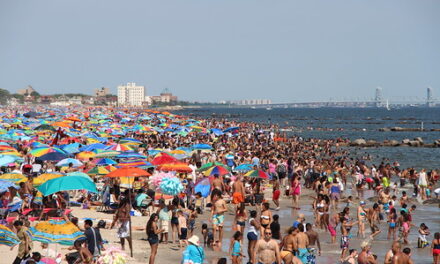


Norman, if you like East Anglia then come and say goodbye. In 2018 the then housing. minister decreed that Norfolk and Suffolk have to plan for 250,000 new dwellings. That’s the population of Suffolk extra and already the roads feel noticeably more crowded.
Cui bono? Big landowners who have the ear of the largely Conservative local governments, but as they say, all that population growth has to go somewhere.
All legal, all perfectly legal. When people begin to notice and complain it will be too late. Nevertheless, they’ll still vote for the parties who caused this housing emergency, this housing crisis.
JF
Oops, sorry ’twas flyer wanted a motor bike.
Sorry Norman it was the Morris Minor Traveller, not your dream motor cycle that was the best on the road! Are there ANY good places for riding a horse nowadays? Quiet roads are OK but we need grassy bridle paths to canter on. And by that I mean short 1 hour rides not the ‘new nobs’ of the horse world who go in for endurance rides which need expensive back up, horse boxes, rest stops etc. That is all our bridle paths pressure groups cater for now. Cyclists are generally OK in rural areas still, but they have been ‘taken over’ by the idea that providing they are all wearing the correct gear and riding the correct style bikes they can gaggle 3 or 4 abreast, feet wizzing round like mad, but uphill, narrow roads, any car behind has to go down to 2nd gear ‘cos no chance to pass them.
You’re right of course. UK is too damn crowded. And life nowadays is all one size fits all.
I wonder sometimes about isolation and how it could work. Look around . There seem to be rather a lot of peculiar nests of often unemployed unemployable and peculiar handcrafting odd sort of persons everywher. Sometimes they only appear at craft fairs, or markets and (peculiarely ) the internet. As I’ve mentioned before, I occasionally isolated a small group of half a dozen or so and put them under pressure to see what happened. There were always results of some kind.
I quite like the idea of Scotlandor the Isle of Wight, or even Rutland Isolated without politicians or tourism or royalty. Remove anybody who has ambition or a steady job. There do seem to be many many craft workers who only come into the light of day for craft fairs etc.For a while two of us ran a Craft packaging firm in Stone . It was an eyeopener. Customers everywhere and numerous, but odd. All with interest and usually with cash..I assume that nowadays they all exist in corners and the holes of our fractured society unnoticed except on unvisited websites and paypal. Support them. The stuff they do is good.
It certainly is awful what has happened to our industries and artisans. It wasn’t the Monarchy, nobility or politicians that gave us the British Empire, it was a man called John Harrison, a carpenter that dedicated his life to inventing the marine chronometer, he is why Britannia ruled the waves.
For me, one of the most iconic pieces of British engineering was the Vincent Black Shadow motorcycle, I’ve wanted on all of my life but don’t suppose I’ll get one now. You have to be a motorcycle fanatic to realise just how ahead of it’s time the Black Shadow really was. Then there are things like the Spitfire and an enormous amount of aviation and marine history.
It’s tragic for me how all of our history of innovation and engineering has been thrown away, squandered, my hero’s aren’t TV and film stars, celebrities or royalty, they are the engineers and tradesmen that really made our country great.
Good morning Flyer,
In my travels through ‘getting on’ for hundreds of firms, I have been astonished by the ingenuity shown by our engineers and the probably millions of ideas used from the wierd machines used, from mass produce ground lenses ( I was taking a commission of Chinese engineers around a factory to show them our secrets. Civil service Orders from Heath. ), a machine to twist strip steel,a huge wheel that somehow stuffed bristles into brushes, the perfect safe, Factories that make everything and anything, invention of banks, to makersof bikes, to boats, to cranes to electronic, from farming to computers.
British ingenuity pervades the world. If patents lasted a hundred years we would rule the world. Unfortunately politics pollutes it..
(Note: I am NOT a socialist – I am English!) The large Corporations, shortly after the war, gathered up their enormous profits and spewed them out of our great country into the countries of enemies of ours – Worldwide, Japan etc, etc.
Complete industrial factories, including those for cars and cotton mills were exported en-block, numbered meticulously, to those countries because in the short term, the profits of the ‘British’ profiteers from the war, could be further bloated beyond their wildest dreams.
These are the same gangsters who are trying to keep us in Europe to further gorge on their obscene profits.
Frenchmen such as Dominic Grief (read his Wikipedia!) are using every trick in the ‘legal’ book to deny us a future OF OUR OWN.
People such as him, not the villagers in ex mining communities, are the true DREGS OF SOCIETY.
He and his cohorts bear little or no allegiance to our country……….withdraw his Passport and shoo him off to his chateau in his beloved France, unwept, unhonoured and unsung. Amen!