
Written by Frederica
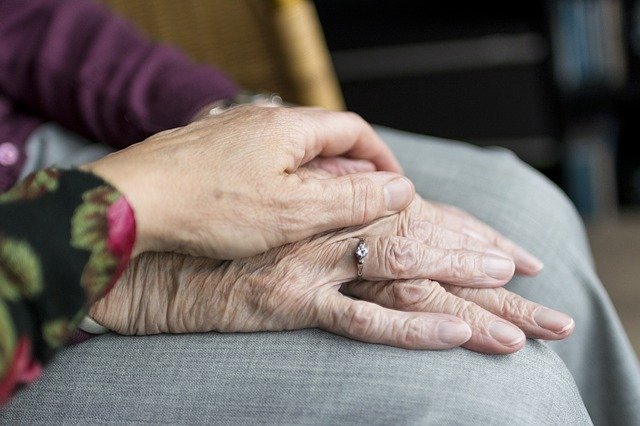
For the last several years I have been a ‘carer’. My husband has a degenerative illness that has meant his care needs have increased over the years. Initially this was by slow increments with a longish plateau between each period. Lately his condition has worsened and the level plateau times have become shorter between each period of degeneration. Occasional inpatient hospital visits have interspersed these different periods. These have been difficult occurrences.
Because I recently had to undergo surgery myself, I needed to call upon the services of a ‘care’ provider company to assist me with care for my husband while I was post-operative and in recuperation.
In a short time I have met with a number of different people who have chosen, for one reason or another, to work in the care profession. Many of them have chosen to share their reasons for doing so with me and to tell me something of their own stories. I have counted it a privilege to be allowed an insight into someone else’s life.
I have come to conclude that the life of most carers is not one to envy. The fact that they do what they do confers upon them a badge of honour that makes the spurious ‘honours’ conferred on the political hangers-on and those in ‘public life’ look tawdry (as indeed they mostly are) by comparison.
There are exceptions of course! The live-in carer I accepted to get us over the first two weeks of my recuperation was not what I had expected. I will say no more, other than that she was only with us for a week.
The daily carers that followed were a much more amenable set of people. It was those kindly souls that showed me the difficulties that they all face in their daily rounds.
There are clearly more people requiring ‘care’ in the community than there are ‘carers’ to accommodate them. Consequently the care companies are taking on more customers than they can really deal with – all in the name of revenue and profits. Thus the staff are taking the brunt of the over-ordering and are being asked to work appalling hours with impossibly illogical rounds – often with only five minutes travelling time between each call where the distance covered might be as much as 12 miles. Logistics? Working from 7.00am until 10.00pm is not uncommon. Additionally on their official days off they are often asked to come to work instead because of the shortage of staff to cope. Understandably sick days are frequently taken.
Officially they are allowed a two hour break during the day, but by my imperfect reckoning that still makes a thirteen hour working day with all the stress that is involved in trying to ensure that no customer is left without the care that they need. Add on to all of this the requirement for COVID testing three times per week (two lateral flow and one PCR that has to be sent in for lab testing) and the latest coercive requirement to be ‘jabbed’. I call that some of the most stressful employment that I have ever encountered! Some of the ‘jabbed’ have told me of their after-effects. Most of them had not even heard of the Yellow Card reporting facility!
My husband is currently in hospital. He developed an infection (not COVID – as testing has confirmed) and his decline was swift. This is not the first time this has happened. His immune system is poor so it doesn’t take much. Thus, he will not be taking the ‘jab’.
The hospital ward he is in is ‘closed’, so I may not visit. I have been able to speak to him by mobile phone and yesterday: a rare treat – a FaceTime call! The day staff are mostly helpful and obliging (despite a couple of them having thickly accented and difficult to understand English). They are clearly stretched to the limit on a full and busy ward. But at least it is COVID free! I have had a daily update from the doctor which has been helpful. But the fact that I am not able to visit has not helped my husband’s mental state. He is not a good communicator and is fearful of the hospital environment. The weekend staff are agency and therefore do not have the day to day hands-on knowledge of the patients. So for the ‘incarcerated’, weekends without visits from family and friends are more of a trial than the weekdays.
Two days ago the buzz went round the ward that some were going to be ‘released’! The use of the word ‘released’ rather than ‘discharged’ says it all!
So, taking into account the above, the purpose of my essay is to highlight the yawning gap between the mostly dedicated ‘carers’ at the patient-facing ‘coal face’ and the indifference that exists within the political and management classes whose responsibility it is to deal with the mammoth requirement that exists for ‘care’ of both the sick and also the elderly that are part of our communities.
I class the GPs as amongst those on the front line most worthy of blame. Those GPs who have decided that they have no responsibility for those on their patient list other than to dispense wisdom from on high via a telephone (or more recently the internet – that, I have been told, should be my ‘preferred’ method of communication!) consultation or to write a prescription for some drug or other that might – or might not – produce some alleviation for one’s symptoms.
Above them, of course, are the Clinical Commissioning Groups who hold the budgets and decide – in effect – whose needs are the most worthy. (I hope their halo’s choke them!)
They have been given this power by governments whose choices are made not through real interest in the welfare of the people needing ‘healthcare’ but by which policy will be most likely to get them re-elected. Since COVID we have become more and more aware that the government agenda is more likely than not to be absolutely nothing to do with the health and wellbeing of the people of Britain and more a question of complete control over our whole lives – and not for our own good either.
My own MP is Minister for Care. From my not infrequent communications with her I would conclude that ‘care’ of the people of Britain is the last thing that matters to her. She, of course, being part of government, will be most conscious of her place upon the career path of plenty that the HoC currently seems to provide to its occupants. But then … you can count upon your thumbs the number of MPs that really ‘care’!
Who cares? QED!







My sister-in-law had a similar scenario after a severe stroke just before her husband died. It is very difficult to generalise when there are some lovely caring people working these jobs. Apparently they are nor paid travelling time either, but that may vary in areas and companies. Then moral must be difficult to hold for them.
I found your article very readable and relatable to my own understanding of the situation.
One of the problems to my mind in this kind of situation is guilt. My upbringing being bolted into a system burdened me with guilt and I am not alone. To be honest we do what we can and I am sure your husband knows that.
Time is beyond my understanding where one minute can be more valuable than a month.
Then there is our understanding of death and our ability to deal with that inevitability.
With regard to the politics I totally agree with you about GPs. Pauline’s experience is not surprising as there will always be exceptions, but alas the general situation to my mind is a terrible indictment of the ethics and commitment of GPs. Unfortunately money and self is taking the lead. Perhaps everything will come to a head. In the meantime, we are never alone even though sometimes we feel we are.
Thank you Kim for your understanding and empathetic reply. It is difficult not to feel guilty about the way we deal with in life and say goodbye to in death, those whom we love. There is always an afterthought that one might have done better or said things that matter and for which we could not find the words to express. We all judge ourselves more severely than perhaps we should. In the end, all that really matters is that we do our best at the time. There is no perfect life nor yet perfect death. There is only the knowledge that we tried! The most abiding redemption comes from connection with others whose own experiences give them true perception of the feelings of their fellow human beings.
Thanks for sharing, Frederica.
I am so sorry for all the stress you have together with your own health problems Frederica and hope that at least by putting “pen to paper” it has enabled you to get some of it off your chest. I hope you make a full recovery and your husband is now in a more stable condition. My thoughts are with you.
Thankyou Lisa. I wanted to put some stress on the fact that the care ‘system’ is nowhere near adequate to cope with care requirements. The fact that it is privatised means that firms put profit before staff who try desperately to give their clients the service that they are paying for while they are put under intolerable pressure to maintain impossibly difficult rounds! Logistically what is being demanded by the bosses is all but unachievable due to traffic saturation and ridiculous zig zagging rounds where manny times a day they are driving to and fro across the patch where calls have not been sensibly grouped to avoid unnecessary mileage!
My husband is still not out of the woods. We had a phone call from the hospital on Friday morning at 3.00am saying we should come in asap. We really thought he was dying he was in such a bad way. He was moved to a ward where they had better facilities to cope with his situation. He is improving but his mental state is not good because he cannot understand why he is out of his normal environment! He keeps pulling out his tubes and cannula!! We are allowed to visit for one hour per day now. It is better but not ideal by any means. Staff are kindly but very stretched.
The population has increased by 9 million since the year 2000 without a concomitant increase in infrastructure and resources. Allied to demographic changes, the increase in single occupancy households, a low productivity economy, a health service strangled by bureaucracy, and a very low calibre political class, and the UK’s destiny is clear. Private companies substitute for local authority care. The Cameron/Osborne ‘austerity’ was mainly by squeezing local authorities some of whose council tax was as much as 40% to cover unfunded public sector pensions and not to confer benefit and services to rate payers. Working in care is a job not a vocation just as nursing is no longer vocational but a career for which degree level credentialism was introduced to confer status and nothing to do with patient care. Against this background, Grumpy Old Woman was lucky to get any care at all.
Unfortunately Stout Yeoman what you say is true.
I can see your point and I do lay the blame for the decline in this Country squarely in the laps of the low grade political group who unfortunately, have governance over us all. If I had not had to have the operation, I would not have needed the ‘care’ at all. I have been caring for many husband successfully for six years. I am sorry I had the operation at all. If I had not done so, my husband would probably not be in this situation. Our lives would have gone on in the normal familiar routine with no outside interference. I kept him free from infection and as mentally motivated as I possibly could. I wish with all my heart that I had not had to put even a toe into the murky waters of ‘care’!
I have always followed the Jane Eyre principle…..”I must keep in good health and not die”! (Plus I have now added…..”and not listen to government propaganda in any way shape or form”!)
As I am paying for this ‘care’ and not at all reliant on the State I am not sure I don’t think I should have needed ‘luck’!
Re no jab no job; more advice;
https://www.moneymagpie.com/jasmines_column/your-rights-if-your-employer-insists-you-get-vaccinated
Mary I have saved this link for future reference and will pass it on where appropriate. Thanks
Interesting Frederica. Much of what you say is born out by my own enquiries.
A neighbour is, or until recently was working as a live in carer. Probably in a private enterprise company. She may have left already because no way was she going to have the jab.
Another neighbour tried as long as possible to care for her husband who was suffering some kind of dementia. She was getting no sleep so finally had to let him go into a care home.
In both cases, as far as I can tell, the carers were dedicated and as you say facing incredibly stressful conditions.
My experience with a GP and the NHS medical centre is different to yours though.
I still feel that particular GP is doing the best he can in view of all the rules from above.