
Written by David Allen
[Read Part 1 here]
Whose party is it?
Any organisation needs to have some form of legal standing. A popular format for clubs of all types, associations and political parties was the unincorporated association. Its main feature is that the members own the assets, they do not belong to any particular individual and on winding up, the assets would be distributed amongst the current membership.
More recently there has been a move to a newer legal entity called ‘company limited by guarantee’. It means that the total liability of the company is a guaranteed amount, usually a small amount, as opposed to the equity of a company whose liability is limited by the value of its shares. This formal structure is similar to the unincorporated association in that no person may own the assets of the organisation, except in this case, where the company to be wound up the assets must be distributed to an organisation with similar aims. Were it to be a golf club, which went bankrupt, any assets would have to go to another golf club, for example.
This is a popular legal format for a political party and most have a company limited by guarantee, underpinning the political party registration.
The benefit of this is that donors, members and benefactors of the party can be assured that their money isn’t going into anyone’s pocket and cannot be used for any purpose other than that of the stated aims of the company in its articles. It is unusual therefore that Reform UK is underpinned by a private limited company limited by shares and not by guarantee, so the answer to the question, who owns Reform UK, is Nigel Farage. He is the only person with significant control, so he appoints and fires. He appointed Richard Tice to be leader, but Nigel owns the party and its assets. This doesn’t mean that the articles wouldn’t necessarily have stated aims consistent with a not-for-profit basis, but at the end of the day it is a privately owned company.
Politically, this isn’t a good move if you want a membership, because members might not like the idea of their contributions belonging to an individual. This is one reason why Reform UK hasn’t got any members, just supporters. It is also the reason why they aren’t likely to seek members and if the party has no members, it cannot be run along democratic lines. The one thing people insist upon if they are to commit time and money to a political organisation is to have a say in who leads it and what the policies are. If those opportunities do not exist it is hard to see how any mass movement can be created.
So why do it this way?
Richard Tice is a political novice. His sidekick Dr David Bull, the doctor who doesn’t actually do any doctoring, has even less political acumen. Being popped on a Brexit party list, selected as a Tory candidate or standing for the Brexit party in by elections shows enthusiasm but leaves a lack of understanding about the reality of politics. A recent David Bull tweet says it all. In response to a comment pointing out that nobody actually votes for Reform UK in real elections he tweeted ‘That will come’. The clear inference is that nothing needs to change, everything is right on target and it’s only a matter of time before millions will begin ticking the Reform UK box. It is a position doomed to fail.
Nigel, on the other hand, is a master of securing his position.
I don’t think that Nigel is keen on overly democratic party structures, and I can see why. The interminable series of leadership elections that UKIP punished itself with was brought about democratically. Its rise was largely due to Nigel Farage and its decline due to its membership, poor electoral proceedings, and a squabbling hierarchy (not that such is unusual in political parties). However, winning elections is a very effective glue, constantly losing them was always going to make life difficult. Nigel battled hard and occasionally angrily (I’m told) with people given power in the party’s democratic processes and consequently with a freedom to be obstructive.
However, he had Brexit. In fact, he is widely acknowledged around the world as Mr Brexit, and rightly so. He frightened Mr Cameron into agreeing to a referendum, he won that referendum, the government was intent on backing away from the people’s decision and everybody knew it and so The Brexit Party was born.
Then came the last of the European elections in May 2019 and this hurriedly created ‘The Brexit Party’, fought them. The Brexit Party was set up along the same lines as Reform UK is now, but the landscape, the objective and the electoral system were very different indeed.
The first significant thing about this election is that it is not a local election but a national one. This is of enormous significance, because the essential groundwork needed to win a local election, even a parliamentary local election is entirely unnecessary with the European Parliament elections. In fact, it’s impossible to do, because there is no candidate and no geographical attachment to a locality other than region. As there are only 12 regions any sense of local doesn’t exist.
The next factor is that the election is held using the D’Hondt election system, which is one of the many bastardised voting systems so enamoured of by geeks and mathematicians. Suffice to say that nobody voting has a clue how it’s worked out (a common feature of complex and artificial voting systems) but oddly, nobody cares either. From a voter’s perspective one can only vote for a party. There are lists of candidates, but in common with UK general elections, nobody votes for a candidate anyway (unless they have a very specific profile) and the combination of party votes only and the pseudo proportionality of seat allocation ensures that decent support is rewarded with seats. Unlike the 2015 general election when UKIP achieved 3.8 million votes (more than the SNP and LibDems combined) and only 1 seat in parliament (as opposed to their 64), the European Parliament elections would be rich pickings for The Brexit Party as it was for UKIP in 2014.
One very powerful link here was Nigel Farage, his association with Brexit, the public’s annoyance with the government for not getting on with it and the third would be the major differences between Euro elections and Parliamentary ones. In Euro elections nobody really voted for representation. What people did vote for was sending the government of Mrs May a very loud message, which they did.
The Brexit Party was set up in record time to contest and win this election. That it did so with such a huge margin was testament to the absolute suitability of the top-down approach to this type of election as it is so equally unsuited to local elections. It was horses for courses.
I don’t blame Nigel for getting out of front-line politics. He’s achieved more than any politician since Churchill and the effort shows. I also don’t blame him for passing the whitest of elephants to Richard Tice, who has little idea of what’s happening, whilst keeping a position of power, just in case, you know? However, the structure of Reform UK needs, well, reform. It cannot possibly be an electoral force for the reasons I’ve explained. It would appear to have no intention of changing, so to you Richard Tice, and your chum David Bull, enjoy the C list celebrity status of the occasional radio appearance, the adulation of those who are on your side politically but are not properly prepared for the massive failure, and the ego boosting nature of leading a political party.
But is there anything that can be done?
Well, there might be, but some re-evaluation is needed.
In 2015, UKIP had a fantastic manifesto, a basket of policies that the ordinary person wanted, but it counted for little. Better to have one big one, like Brexit. Reform UK does! immigration, particularly the illegal kind. Are you strong enough to commit to turning the boats back, returning illegal immigrants and can you devise a plausible strategy to achieve that? Nobody cares about cladding, no, really! They do care about potential terrorists flooding our shores and the million or two illegals already here. Can you handle a woke backlash?
Reform UK’s commitment to no vaccine passports has already been fatally wounded after today’s announcement, so any policy has to be a commitment that cannot be trumped. The website still leads with a policy that is already dead 12/09/2021 22:08. This is unforgivable and it will probably be there for days. The rest of the site is unattractive, focussing on internal stuff when it needs to engage the voter.
The next election is 2024, so plenty of time to build a party in the country. The problem is that Richard Tice isn’t in control. If Nigel was driving the bus, I could wish for nobody better suited, but he is the very last person I would want to be in the back seat. The reality is that Nigel owns the party, he owns the Reform UK Tice and nothing can be done that he doesn’t approve of. Quite a millstone, eh?
The UK is a conservative country, and we have a socialist government, albeit misnamed. In a conservative country, a conservative party ought to do well, but the conservatism is fragmented. It’s residing in a number of like-minded small political parties with egotistical leaders. One of the first jobs ought to be to bring the support together, even if that meant a change of leadership of whatever the party is called that would emerge. Could Richard do that? Would Nigel allow it? Richard Tice may not have what it takes to get elected but he does have a profile big enough to elicit support for an alliance. Extend the olive branch, we all want the same thing, a truly conservative government, because without that all the changes needed will not happen. You cannot win a chess game in just one move.
All the people are there, all the support is there, the magic would be to bring it together. It’s likely that Nigel would need to be left in the bus alone to achieve this, but then again successful politicians don’t need a mum.
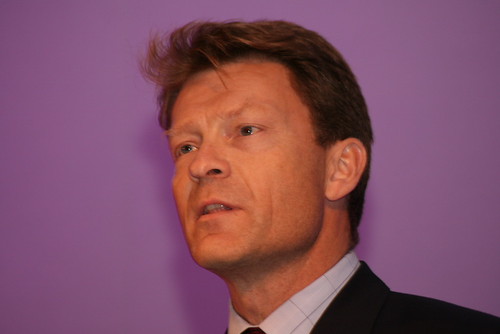
Photo by derek4ukip 






Dear Viv,
I read David Allens letter and several times since, My conclusion is that he has put his finger on some problems but that Nigel has basicly nailed it. I want to know more. But Ive seen ‘details but the crux of it seems to be Nigel owning shares, and the nature of aimited liability company. It’s clever and works ( or can ). ( or may )
PS Keep going Viv. I know the stresses and sleepless nights and sheer extra work . We, your supporters are very grateful.And will continue always to listen attentively in the future
Farage played a blinder getting a referendum but make no mistake it was the cross party Vote Leave that won it.
Jake…….you are right on that score 100%. It was certainly Vote Leave that won the day. I’ll never know why UKIP chose to fall in line with Leave.eu who were worse then useless to deal with. They never came up with the goods only excuses, and I was a constituency leader with them. When Vote Leave won the nomination to lead the ‘Leave’ campaign our group which numbered 105 supporters most of which were UKIP members moved lock stock and barrel over to Vote Leave and I became an Area Coordinator with them. They were the total opposite to Leave.eu and were highly organised and supplied us with all the resources that we needed to run an effective campaign irrespective of the cost. Yes, by and large they were Conservatives, but it didn’t matter a jot because we had a common bond and wanted to get out of the European Union. Having said that it was the UKIP side of Vote Leave who won the day in my neck of the woods, as we were the ones who delivered 47,000 leaflets to all residential addresses in the Borough and ran weekly street stalls for five months, the Conservative leavers were nowhere to be seen, but they did organise the canvassing part of it however which was their area of expertise.
Paragraph one I wavered, paragraph two I fell over. Wait, where is the value of commitment, of love, of work, of effort of ownership of community. Surely money and assets have no place in the ‘new normal’ of our choosing? Legality may be reduced to one sentence “Do no harm” in Common Law.
Then the blockbuster “it cannot be run along democratic lines.” I will not comment.
“Lack of understanding about the reality of politics.” This I like, for the reality I envisage would shake that perceived ‘reality’ to its roots. I remember standing in a queue at the café at the UKIP Conference in Weymouth talking to Stuart Agnew. The subject was the new in words on the block ‘radical’ and ‘grassroots’. Fascinating how times and understanding has changed. Incidentally my next conversation in that room was with Neil Hamilton, what fun I had.
We must, change our perception of politics. The reality is changing, like fast!
“The structure of Reform UK needs, well, reform.” I just love it and am enjoying your article immensely.
“Like-minded small political parties with egotistical leaders.” Exactly! and why the party system will not work from small to large parties.
“One of the first jobs ought to be to bring the support together, even if that meant a change of leadership”.
My last quote honest.
David I loved your article, a trip down memory lane. Don’t worry about Roger he is ok, and anyway, I forgive you. But really!, reality has moved on. Not only do we realise that we have been lied to about just about everything but the whole perspective of politics has to change.
Yes people do not vote, yes those who do vote, vote for a purpose but the reason is now ideals, lifestyle and happiness. That reason is community, it’s not party, or leadership, or system, or anything from the ‘old’. It will be about true grassroots. There is a tsunami on the way. It may be over the horizon but check your sat nav. It is our only hope.
Thank you. More please, a lot more.
I had this horrible thought that my comment could in some way be construed as sarcasm. That was not the case at all. This is the conversation that is needed imho.
UKIP was the only party I had joined or ever will join. I see other members as a lost army. People with a vision of Independence, hallelujah. We fought so hard and won a victory if not the war. What fun we had what a victory we won. An army that was deceived and scattered no more than Ronin. Such a shame.
But those people are still there. The spirit, the inspiration and the dream is still there. Hope is a bit weak.
It was never about UKIP per se, it was about vision and our aspirations for a better life of the members.
As Jake has alluded to “Ask not what you can do for a party (political) but what you can do for your community (country).
Now those lost UKIP supporters need to waken up to the real issue; one that the EU is simply part of. That issue is the planned world government which will remove the freedoms of all except a self-declared “elite”. It’s weapons are the fictitious climate change, mass immigration and the scamdemic to force us all to be injected with an untested, unapproved “vaccine”. In the latter context we need also to consider the plan of the UN set out in their various “Agendas” for a truly massive and unjustifiable reduction in world population.
Thore is a need for a real opposition party as never before. Leaving (?) the EU was but one small step to regain our freedom.
I believe that NF is not aware of the huge political opportunity that the exaggerated hysteria over anthropogenic climate change will offer when the overenthusiastic response begins to destroy jobs, ruin our economic competitiveness and literally kill the old and the poor. He has had other fish to fry.
I do not believe that any party which has as its main policy the ending of mass immigration has any chance of breaking through as all the forces of woke leftism, the owned newspapers, the out of control BBC, the majority of every information and entertainment online outlets would scream ‘waycist’
The British public will have to be desperately scared before it would support such a party.
However, when the Grid begins to fail they will turn against those responsible in a flash.
JF
From what I have seen Richard Tice is not exactly inspiring and Reform appears to be going nowhere.
The only plus to Mr Tice is that he has contacts and access to big money backers.
The money factor plays a major factor and could fund one rejuvenated party if able and talented people act wisely in a spirit of cooperation as one party.
As a supporter of Reform UK, I always enjoy reading diverse opinions, and my thanks for this article, however, I would like to make 5 points.
1, Reform UK frequently polls its supporters to give us a chance to express our opinions on various policies, which I find reasonably democratic.
2, I wouldn’t characterise people who have been elected as MEPs, and have served in Brussels, on a successful campaign to leave the EU against all precedent and pressure – as people who have no understanding or experience of politics.
3, Reform UK has handled a ‘woke backlash’. It’s bank account was ‘cancelled’. It is still going strong.
4, During the December ’19 General Election, Nigel Farage proved that he would put our country before himself and his party, by standing down candidates opposing Conservatives, in order to avoid a pro-EU Labour Government. It was a difficult decision that angered many of his potential candidates and drew huge criticism from the MSM, but it showed where his moral compass points.
Catherine Terrie. I also receive those polls and fill them out. I thought Nigel Farage was 100% Brilliant in Brussels giving two fingers to the EU and I agree with you that he did his best to prevent Corbyn’s Labour getting in and stopping Brexit.
I just think that come the next G.E. it will be a different ball game.
Also every Constituency is different and there are regional differences too. We can not guess what alternative parties or individuals may stand where.
We just have to do our best with our vote when the time comes. Mine WILL NOT BE for any of the main parties, whatever!
You are probably right David Allen.
The only use I can see for Reform UK is a kick up the a**e of the main parties at the next G.E. And unfortunately if there are several alternatives offering, no one of them, can deliver that kick.
We just don’t know what will happen twixt now and then.
Well! at last we seem to be coming to our senses and ‘admitting to recognition of Facts’
This about it! Do we really need a ‘Party’ with no hope whatever of competing with what’s supposed to be “Government”? After all, think about it, if you were conservative wouldn’t you be, thankfully very grateful, for any “Party” that was still going to vote conservative at the end of the day? because that’s what ‘Reform’ is likely to do.
We have just got to give undying support to, UKIP. Here is a party who have experienced the hazards and embarrassing downfalls and are now ‘Grown Up’ sufficiently, and witnessed enough ‘political stupidity’ to understand the importance of
“Representing” the people as government is (was) designed to do.
Very well said Graham Bolton. Just bought my conference ticket.
It’s a balancing act we have here. On the one hand. Nigel needed to be 100 % sure of Brexit. and that would just not have happened if Corbyn’s Labour got in… So in that instance Nigel had to do what he did.
But a new party such as Reform still will for a few years yet, get enough traction to actually change voting behaviour, to allow a third and new party into parliament. Perhaps. Anyway Whatever Tory and and Labour do, It is obvious that neither of them will accept another competing party. I believe that ukip is now a Tory poodle. and that it’s presence a, lone could well split the protest vote. There is only one way to stop that .. And there are several ways to destroy ukip finally. However it is likely to not even be necessary…
It might be desirable for the Tories or Labour to keep a Traitor party alive. There are limited ways to keep ukip as a threat but available for reincarnation, Exactly as they have done by keeping them in Wales.. Perfect. But there are many other options.
So the best option left is a new party with innovative e organisation, and complete with Nigel without power but plenty of exposure.. I believe Reform is capable of changing into this .
Surely the Traitor parties, by the proper definition, are the Tories and Labour, which both want to destroy life as we knew it.
P.S. I meant if there are several alternatives offering in the same Constituency no one of them can deliver that kick.
Indeed Pauline but will the leaders of those alternatives ever waken up to reality?